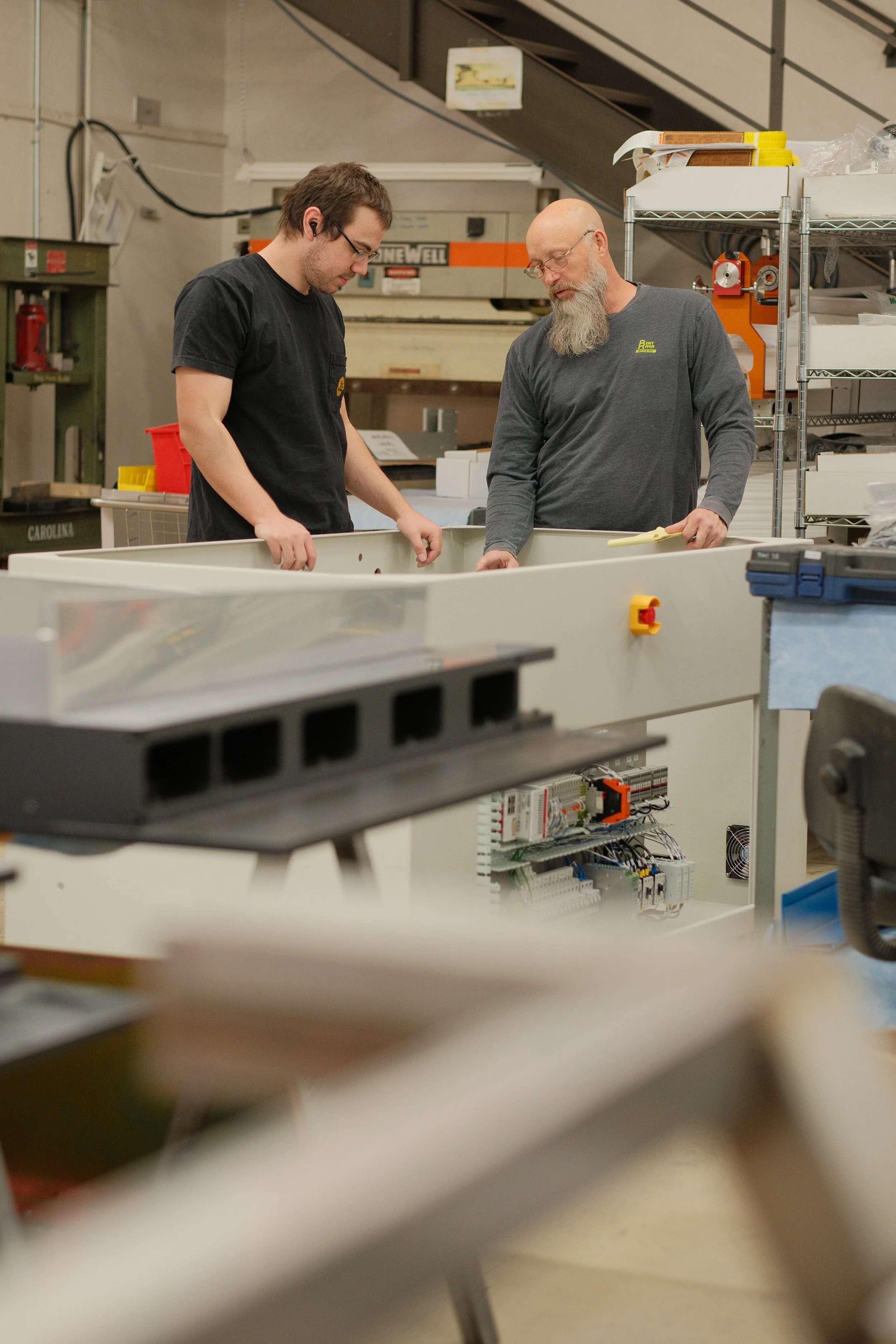
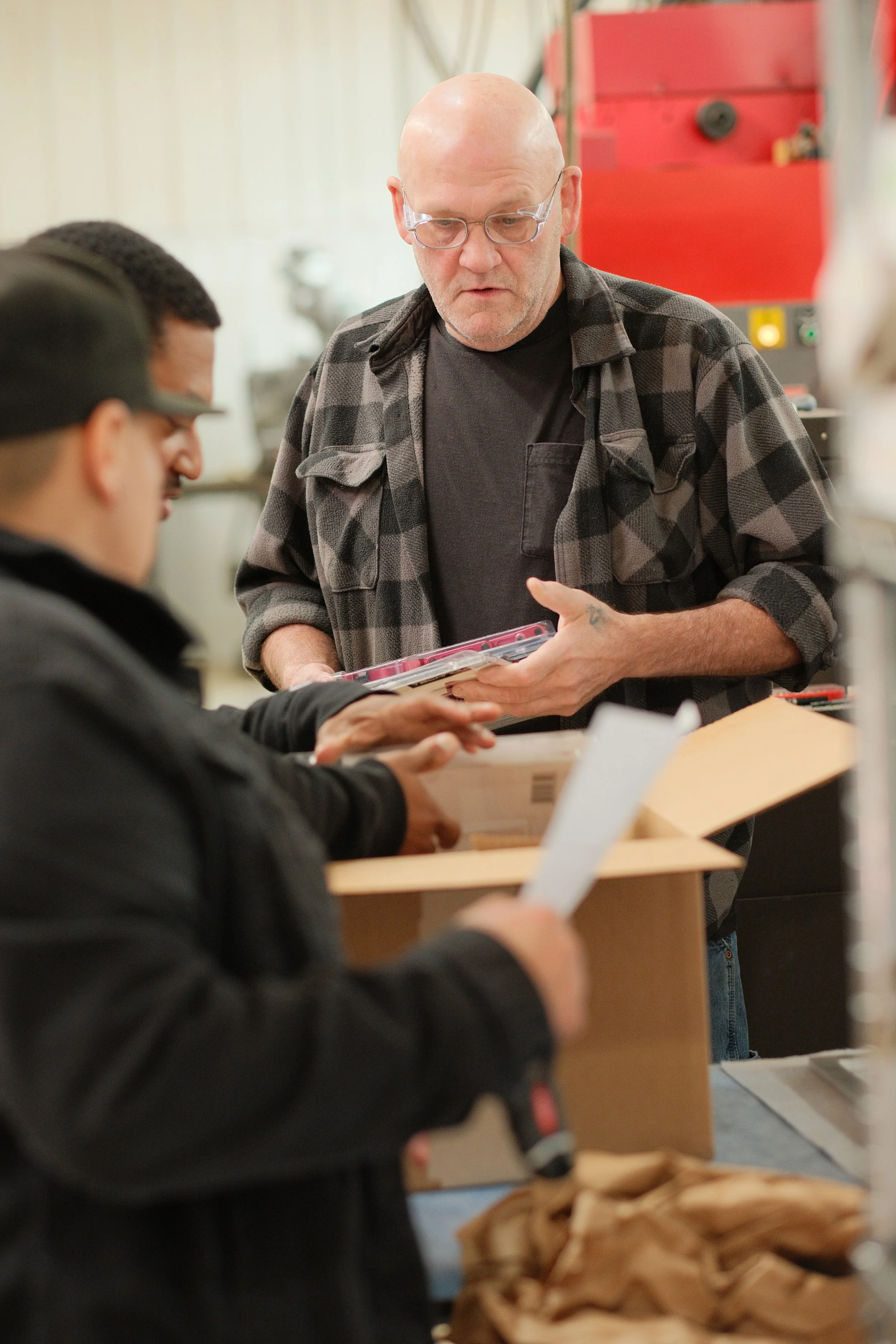
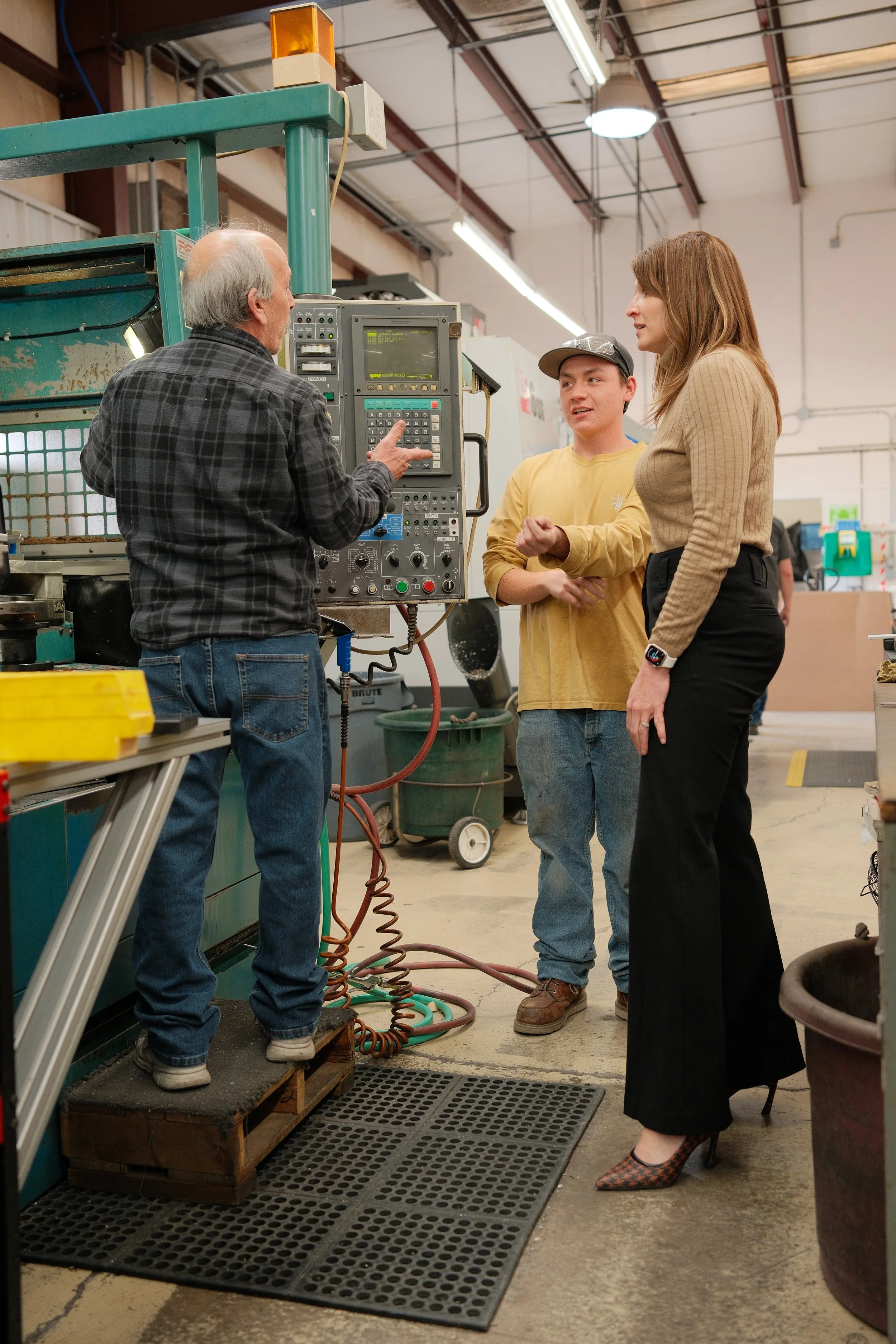
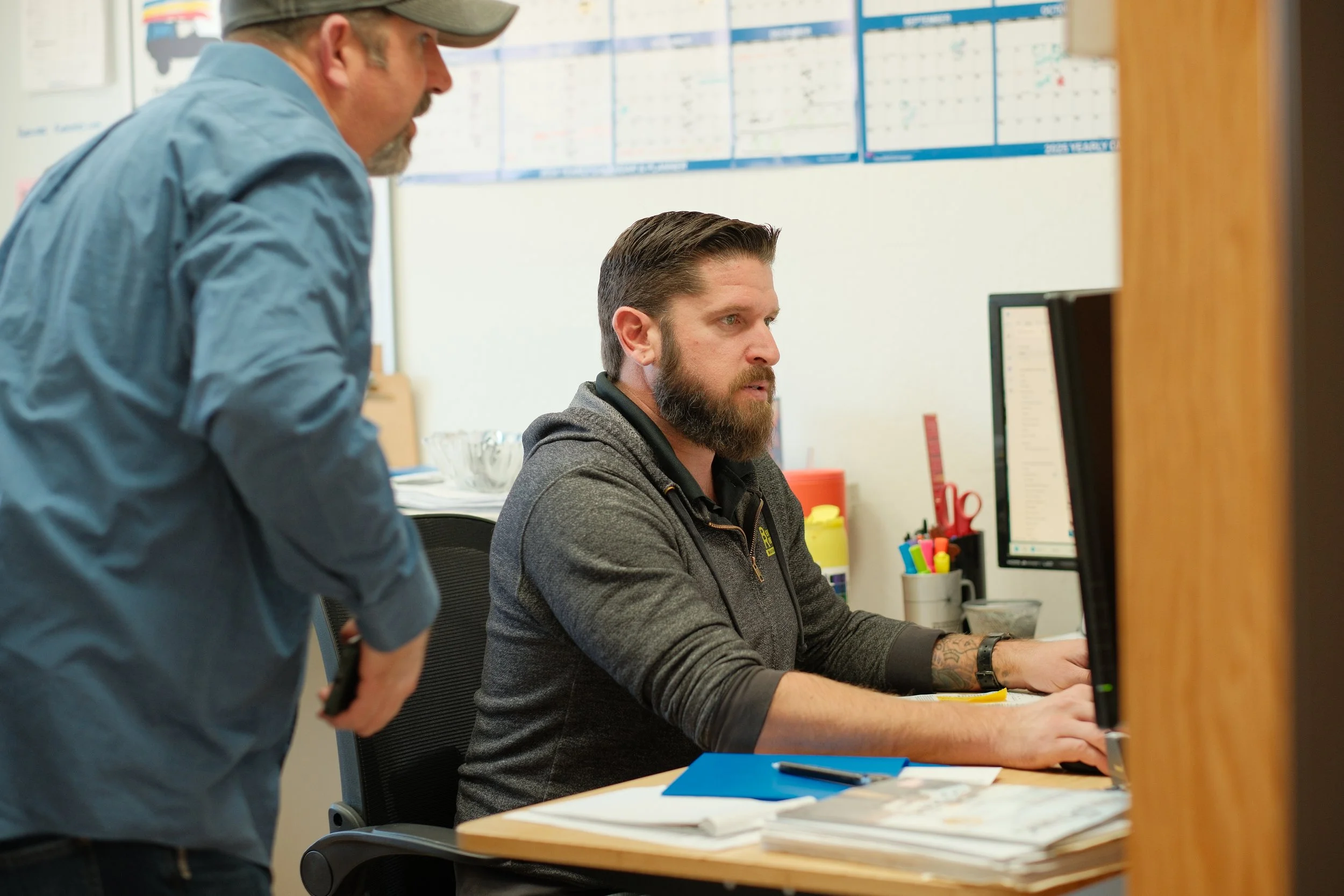
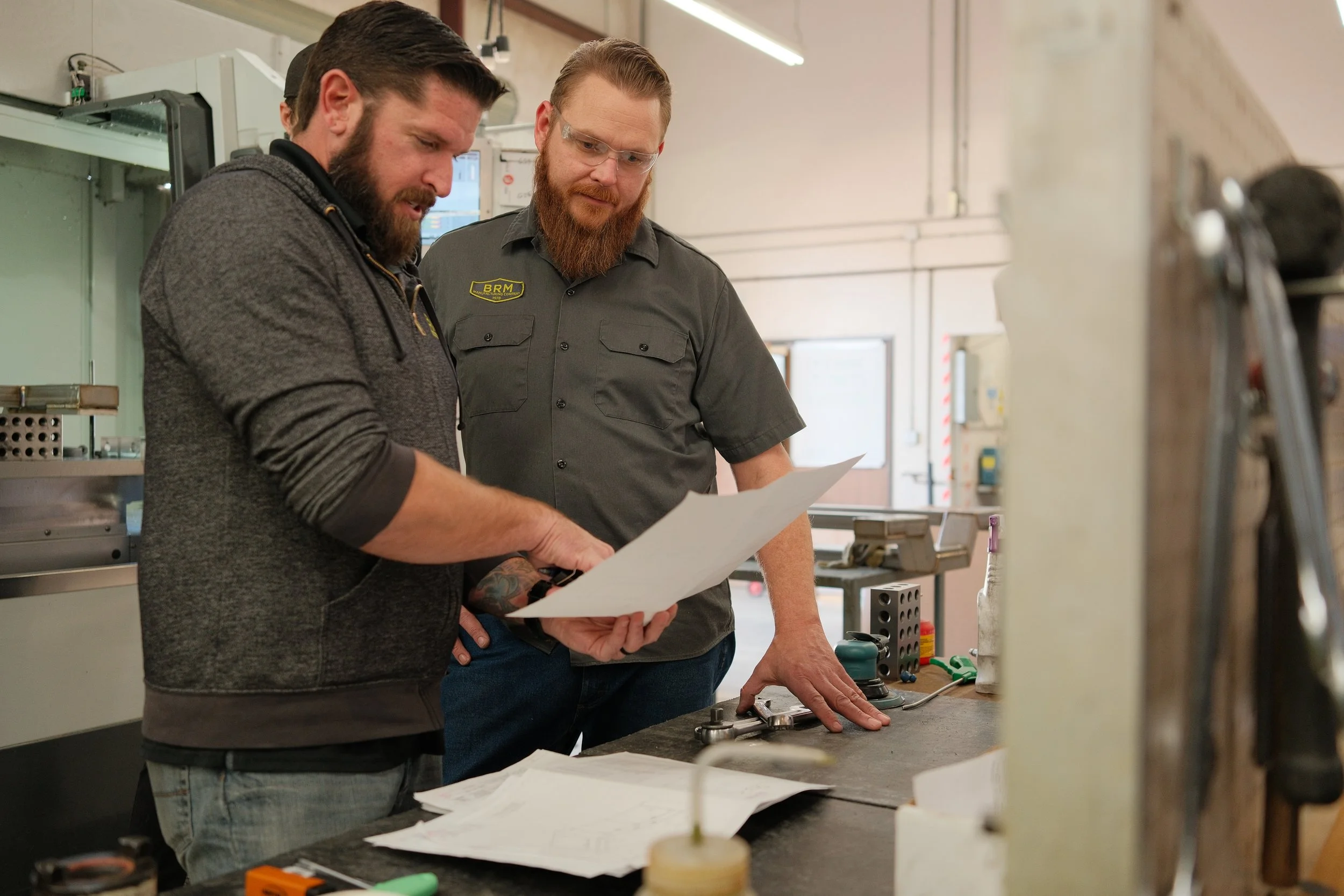
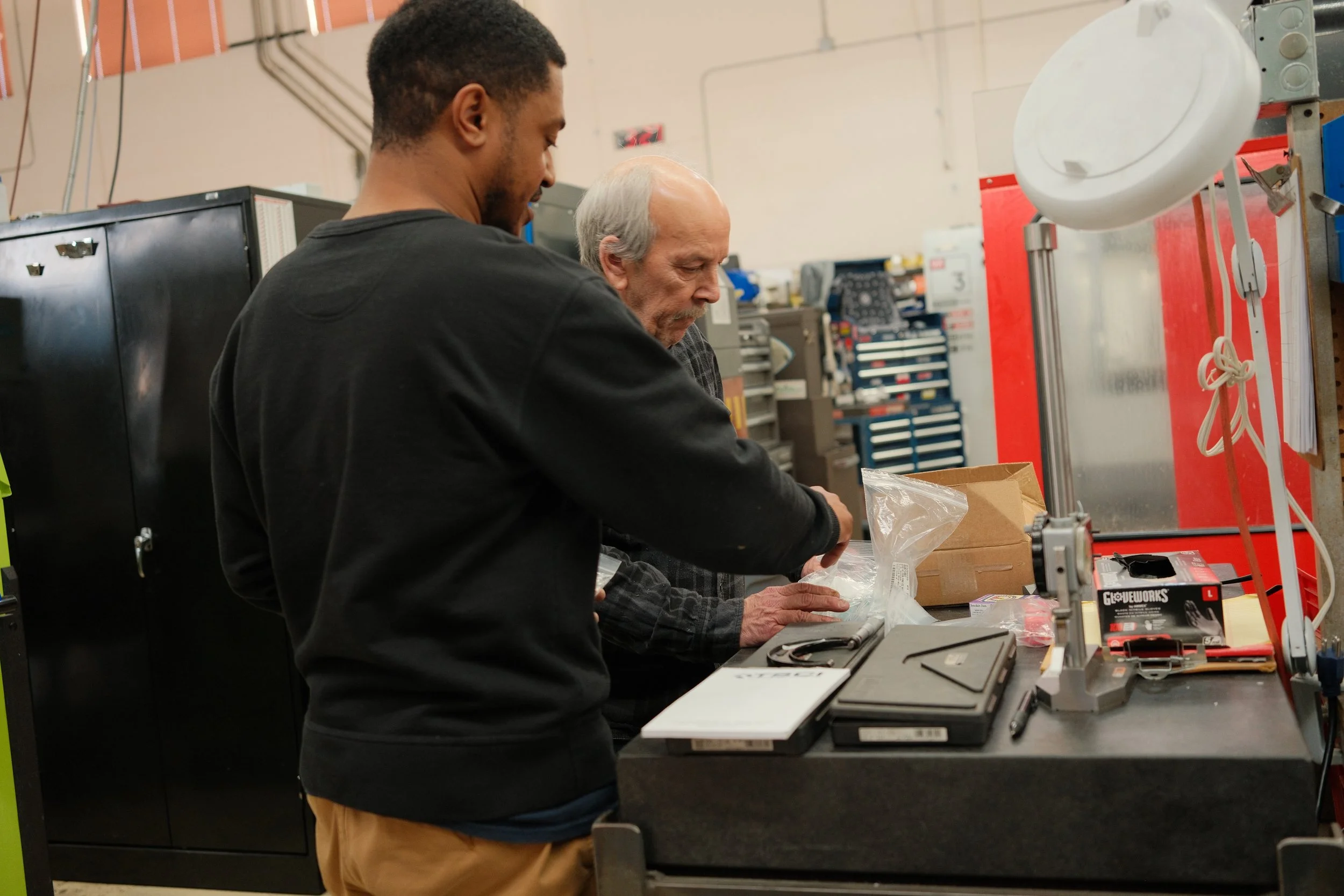
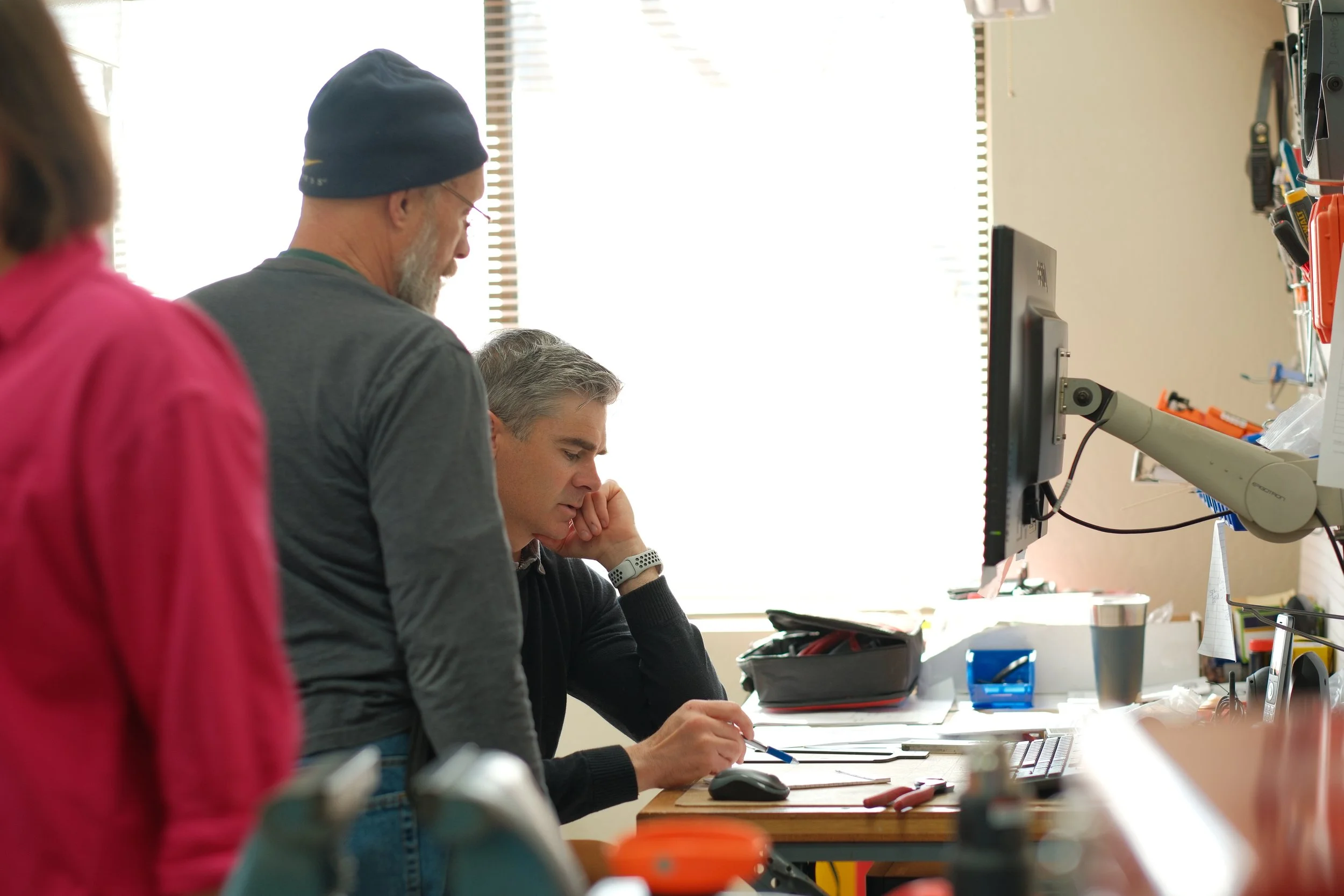
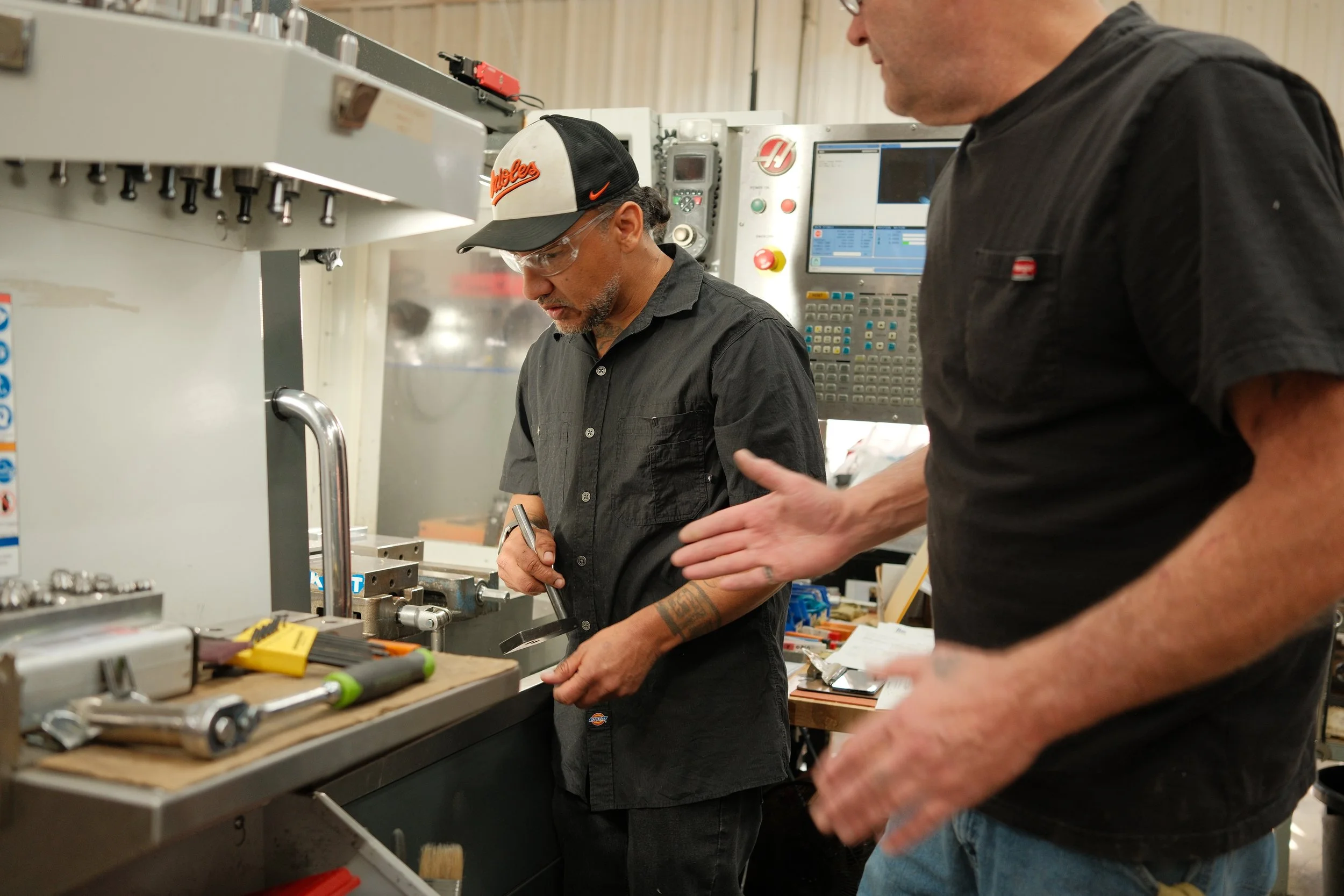
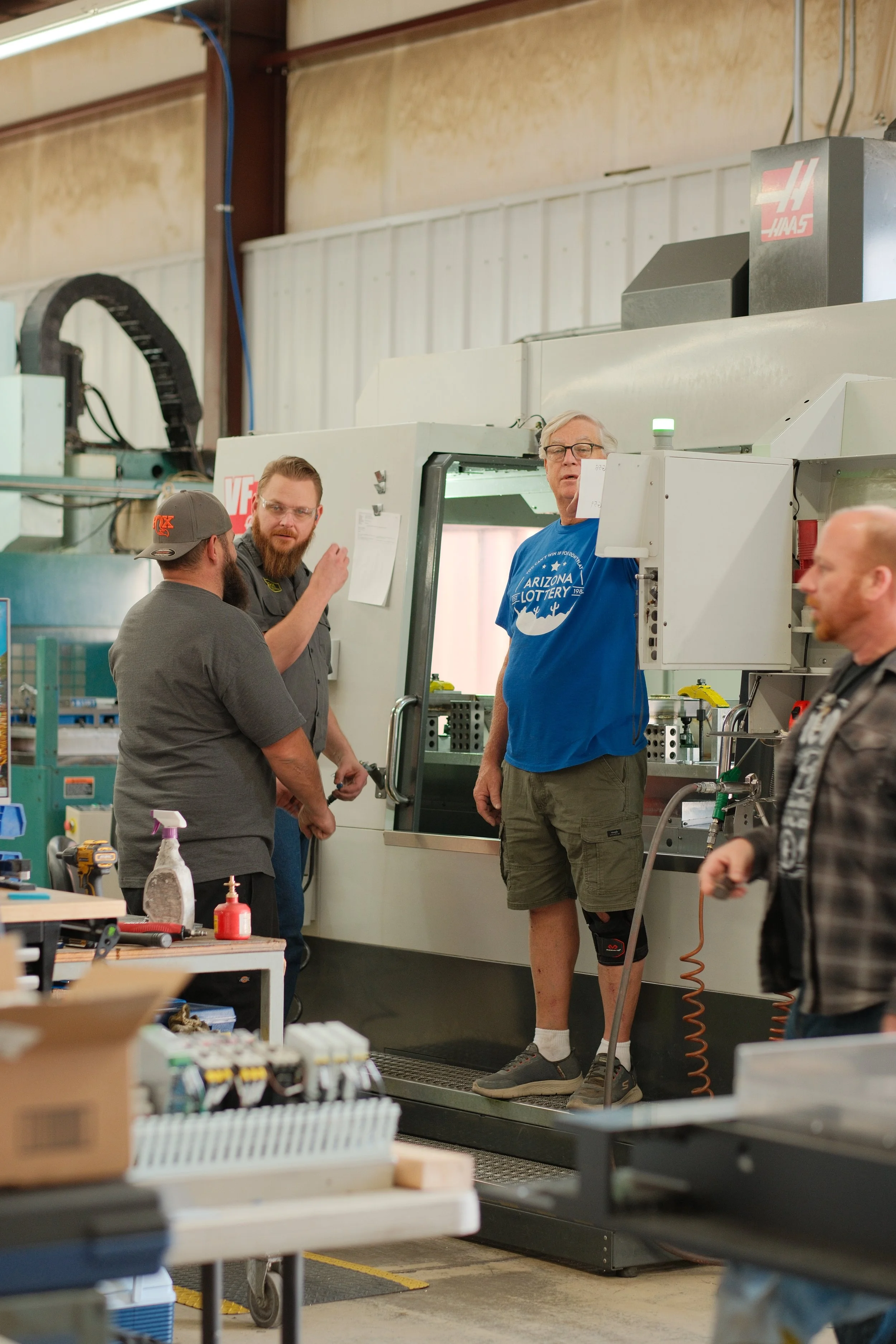
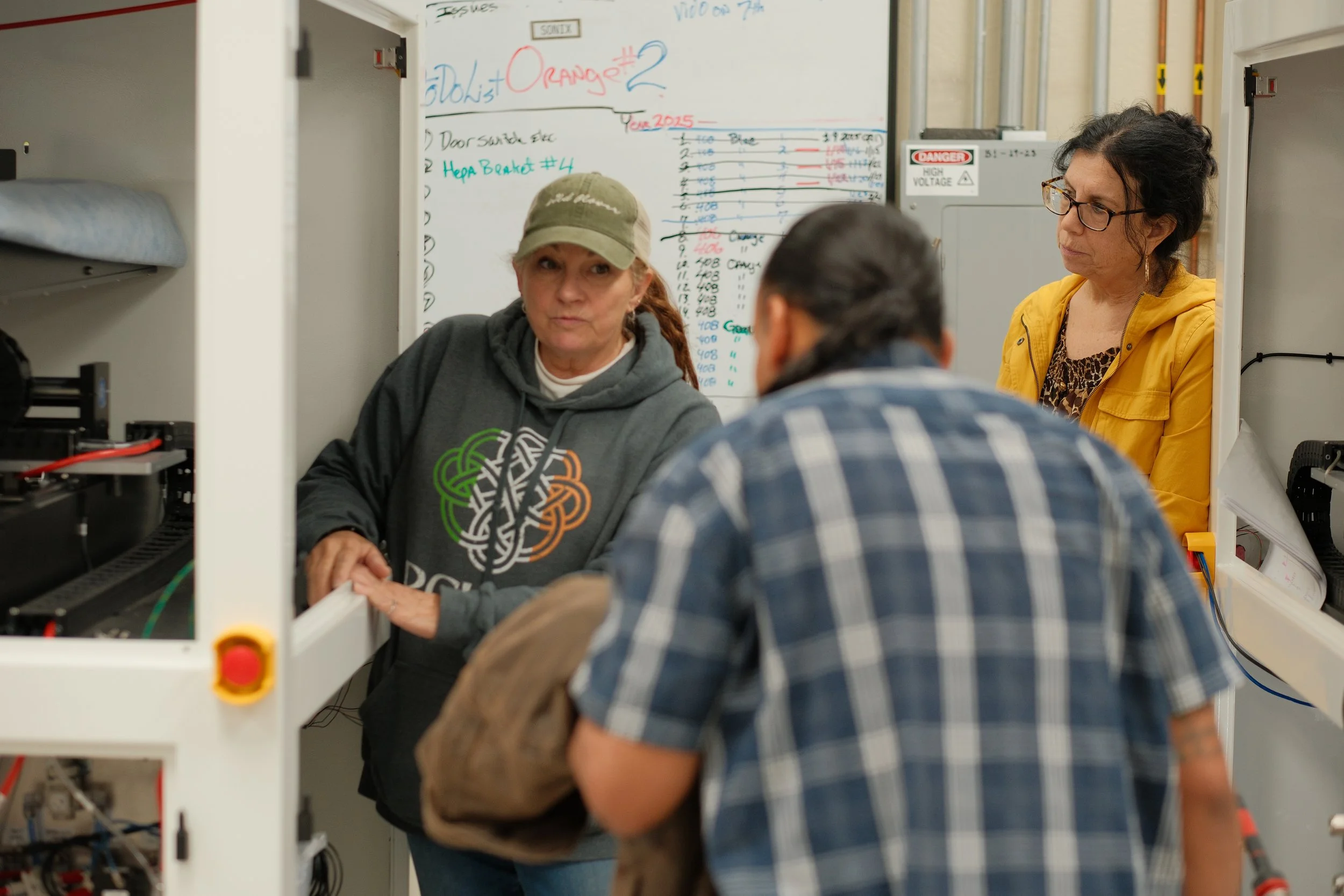
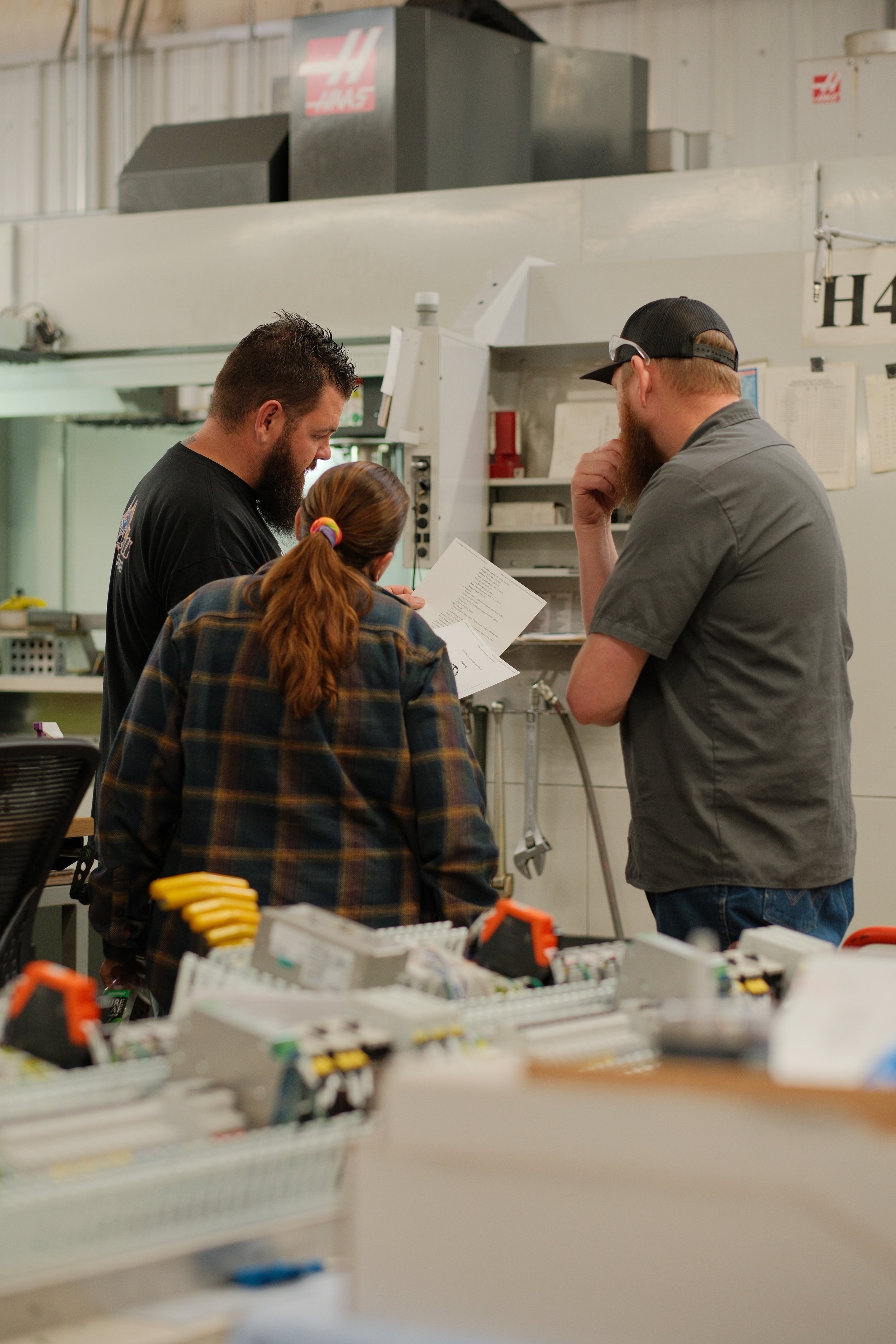
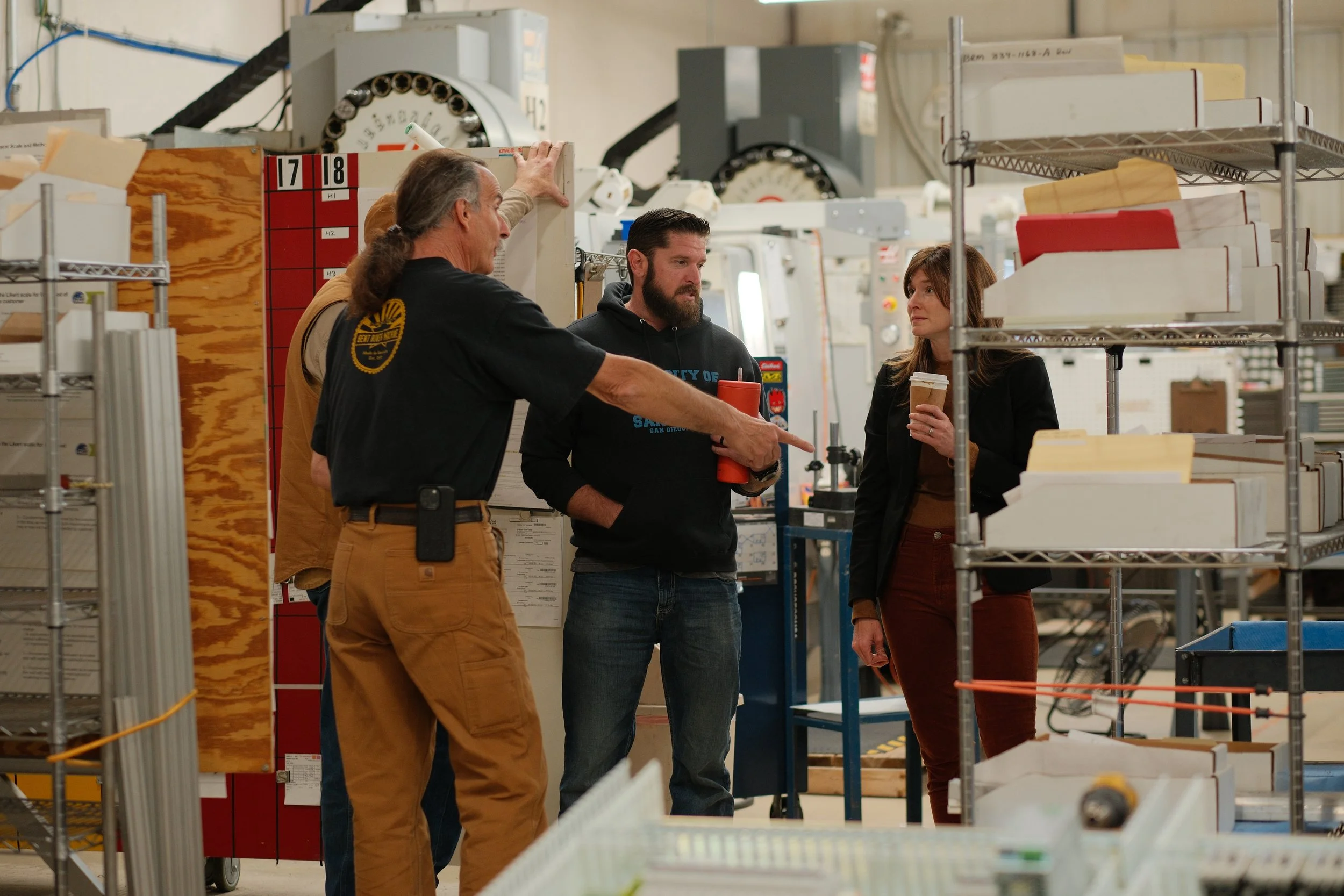
Jessica and Geiler Eckman have built a company where a veteran machinist and a newer hire will stand together around a piece of equipment, without being asked, and work on a problem until it is solved. Where people make the call because they want what leaves the building to function, not just technically comply. Where collaboration is not a program or an initiative, it is simply how the work gets done.
None of that happens by accident. And none of it can be trained into someone who does not already carry it.
The most talented person in their field will not make it at Bent River if they cannot share what they know. If they cannot ask questions. If they cannot look up from their own work and see what the person next to them needs. Jessica is direct about this. The people who do not make it are rarely the least skilled. They are the ones who hold their knowledge close, who draw hard lines around their role, who mistake individual capability for what makes this place work. They become isolated, she has said, and usually find their way out on their own because they were never really part of what was happening here.
What is happening here is collective. Bent River does not run a production floor where operators stand in front of machines and make boxes of parts. The majority of what this shop builds is new to the world. A drawing arrives, and a team turns it into a functioning system that has never existed before. That requires people who are energized by problems that lack answers yet. People who are creative enough to figure it out and generous enough to do so together.
Geiler describes the feeling of walking into Bent River as distinct from other shops he has visited. There is an energy, he has said, that you can feel when you come in the door. Not operators standing at machines. Something alive. That energy is not generated by equipment or process. It is generated by the specific kind of person who chose to be here and keeps choosing to be here.
Those people tend to share something beyond their technical background. They appreciate what Bent River is: a rural shop in a small Arizona town that does work in tech, defense, semiconductors, and space. Work that most people in Clarkdale will never see but that quietly shapes the world they live in. Machinists here have told Geiler they could not do this elsewhere. The combination of complex, meaningful work and a place that treats them as people with lives beyond the building is not something you find everywhere. They are not wrong.
Jessica and Geiler are selective about who enters that environment, not out of exclusivity but out of responsibility to the people already inside it. One person who hoards knowledge, who waits to be told what to do, who sees the dishes in the sink and keeps walking, changes the temperature of the whole room. The culture they have built is neither fragile nor self-sustaining. It requires people who reinforce it simply by being themselves.
That is what hiring is, underneath all the interviews and skills assessments. It is a question about fit, but not in a superficial sense. It asks whether this person will make the people around them better or make the work harder. Whether they will stand around that machine with the veteran and the new hire, or whether they will stay in their lane and wonder why nobody includes them.
You cannot teach someone to care about the person coming into the stall after them. You cannot train someone to find meaning in building machines that end up in space. You cannot install the instinct to look up from your own work and ask what needs doing next.
You can only find the people who already have it.