When Values Cost You Something - Pt 1
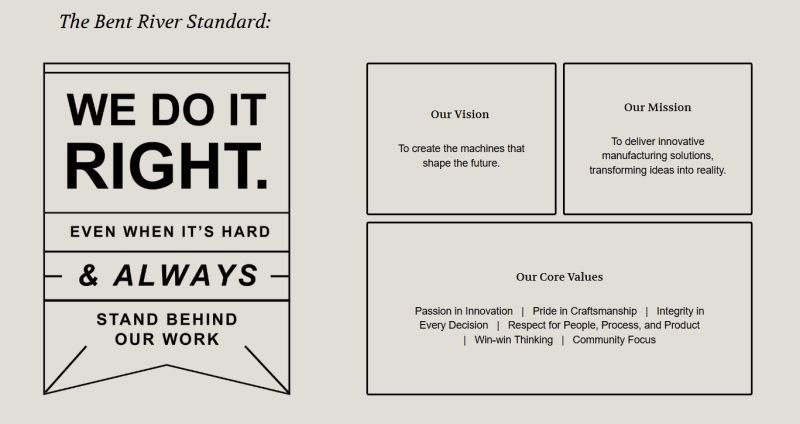
Respect for people is not a statement at Bent River.
It is a line.
Geiler Eckman grew up watching his parents build Bent River Machine. When he and Jessica took ownership, they were not starting something new. They were inheriting something worth protecting.
Which is why winning the largest single purchase order in company history felt so right. An integration project in Texas, the kind of work they had done before. They put together the most competitive proposal they could and won. For two people who had just taken the keys to a family business, it felt like confirmation.
It wasn't.
The end customer did not treat people well. Bent River employees were asked to work under unsafe conditions: no air conditioning in a Texas summer, concrete dust in the air, and no acknowledgment that what was being asked of them was unreasonable. The schedule was unrealistic. Accountability for delays that weren't Bent River's fault was nowhere to be found. And when it became clear the situation was not going to change, Jessica and Geiler made a decision that hurt the business. They ended the contract, walked away from full payment, and brought their people home.
Geiler tells this story with vulnerability. He is precise about what he got wrong. He wanted the win badly enough that he pushed past warning signs he should have heeded. He did not push back when he should have. He has said that he let ambition pull him away from being true to what was realistic and from standing up for Bent River. The emotion he carries about that project is not regret about losing the contract. It is about not being true to who they are.
That honesty is the point. Owning the part you played in a hard situation is what Bent River expects from everyone on the team, starting with the people running it.
The decision to leave, though, was not a mistake. It was the moment Jessica and Geiler found out what their values were worth. Respect for people is not a statement at Bent River. It is a line. When that customer crossed it, they chose their team over their biggest contract. They could not have known, going in, exactly what they stood for until something tested it. The Texas project was that test.
Everything built since runs through that decision.
It shows up on the shop floor, where a veteran machinist and a newer hire will stand together around a piece of equipment and work the problem until it is solved. No hierarchy. No "that's not my job." Just people who understand that the work is collective and the responsibility is shared. When Jessica sees that, it stops her. "I get up every day," she has said, "to facilitate an organization that can bring this collaboration together."
It shows how Geiler thinks about the people who come to work here. They are treated as humans with lives outside Bent River. If someone needs to talk to leadership about something happening outside of work, that is not an interruption. It is part of what this place is.
Bent River has spent more than forty years building machines for industries where failure is not an option. But the company's identity was never really about what it builds. It was always about who it refuses to become. Jessica and Geiler found that out on their very first test as owners.
They have been building on it ever since.